
When a prospect tells you, “I need to think about it,” “The price is too high,” or “Let me talk to my kids first,” it’s easy to assume you have an objection-handling problem.
So, you look for a sharper comeback, a slicker closing line, or a better product sheet. But in reality, the issue started much earlier in the meeting.
Most prospects don’t buy because they don’t fully understand the consequences of doing nothing.
Weak conversations create weak decisions. When you spend an entire appointment pitching features, listing rate charts, and talking about policy mechanics, you leave the prospect in an intellectual head space. But life insurance isn’t an intellectual purchase; it’s an emotional relief purchase.
The top-producing agents don’t focus on selling policies. They focus on elevating the depth of the conversation.
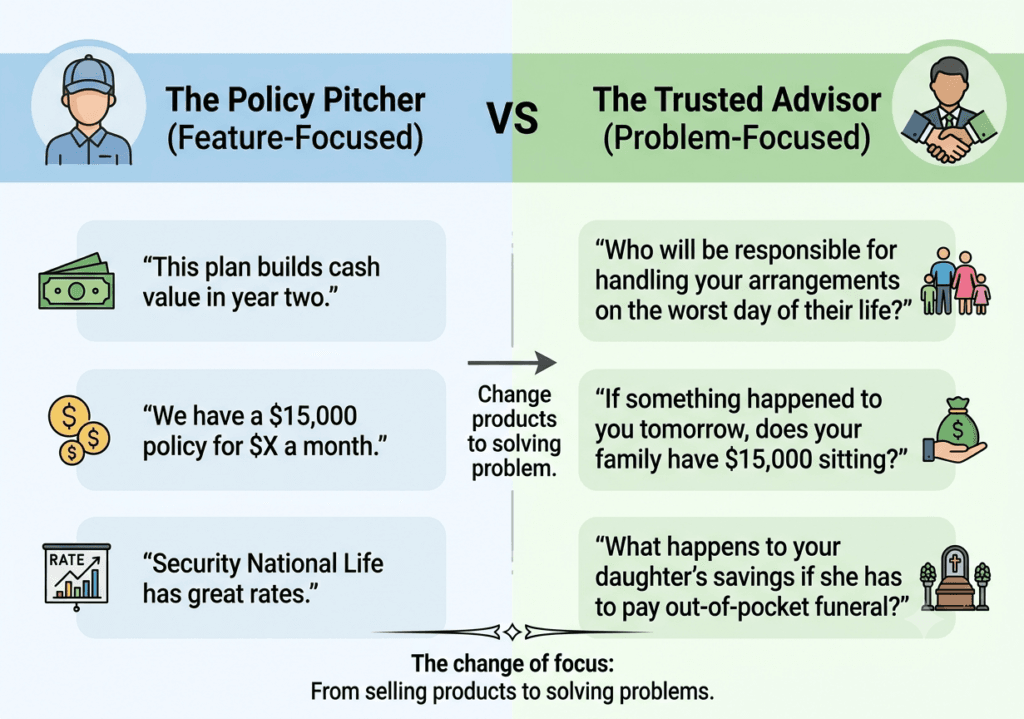
Policy Pitchers vs. Problem Solvers
The average agent acts like a human brochure. The elite agent acts like a trusted advisor.
When you shift your focus from explaining coverage details to uncovering underlying problems, the entire dynamic at the kitchen table changes:
Exploring Consequences: How to Uncover the Real Need
A prospect will rarely feel urgency to buy coverage until they vividly visualize what happens if they don’t. Your job is not to scare them, but to help them look honestly at the financial and emotional burden left behind if no plan is in place.
To deepen the conversation, guide your prospect through three critical layers:
Layer 1: Uncover the Problem
Find out what they currently have set aside, and be precise.
- “If you passed away tomorrow, what specific plan is in place to take care of the final expenses?”
Layer 2: Explore the Consequences
Help them see the ripple effect on their loved ones.
- “If your family had to cover a $10,000–$12,000 bill next week, where would that money come from? Which family member takes on that stress?”
Layer 3: Discover the Personal Value
Let the prospect articulate why taking action matters to them today.
- “How would it feel knowing that your daughter won’t have to put that burden on her own credit card?”
Once the prospect realizes the cost of doing nothing is far higher than the monthly premium, the decision to buy becomes natural.
Shift Your Perspective: Guide, Don't Push
If you feel like you are dragging a prospect across the finish line, you are over-functioning in the conversation.
Your goal isn’t to persuade someone to care about their family. They already do. Your goal is simply to help them discover why taking action today protects the people they love most.
- Stop pitching features.
- Start asking deeper questions.
- Let the prospect state the problem in their own words.
When the prospect voices the problem and recognizes the consequence, they don’t feel “sold”; they feel understood.
Elevate Your Next Presentation
Better conversations create better results. Before your next appointment, review your presentation flow:
- Ask more, speak less: Aim to listen 70% of the time and speak only 30%.
- Focus on the “Who,” not just the “How much”: Keep the conversation anchored on the specific person who will handle their estate.
- Connect policy to peace of mind: Make sure the coverage isn’t viewed as an added bill, but as an immediate shield for their family’s bank account.
Master the depth of your dialogue, and the closes will take care of themselves.